
Artist in Bathhouse: Nastia Craig
Rest, reflection, and the quiet layers of the self
At Saunaday, we believe the bathhouse is more than a place for heat and cold. It is a place where the mind slows, the body resets, and the senses open. As part of this philosophy, we are excited to introduce Nastia Craig, Saunaday’s first Artist-in-Bathhouse.
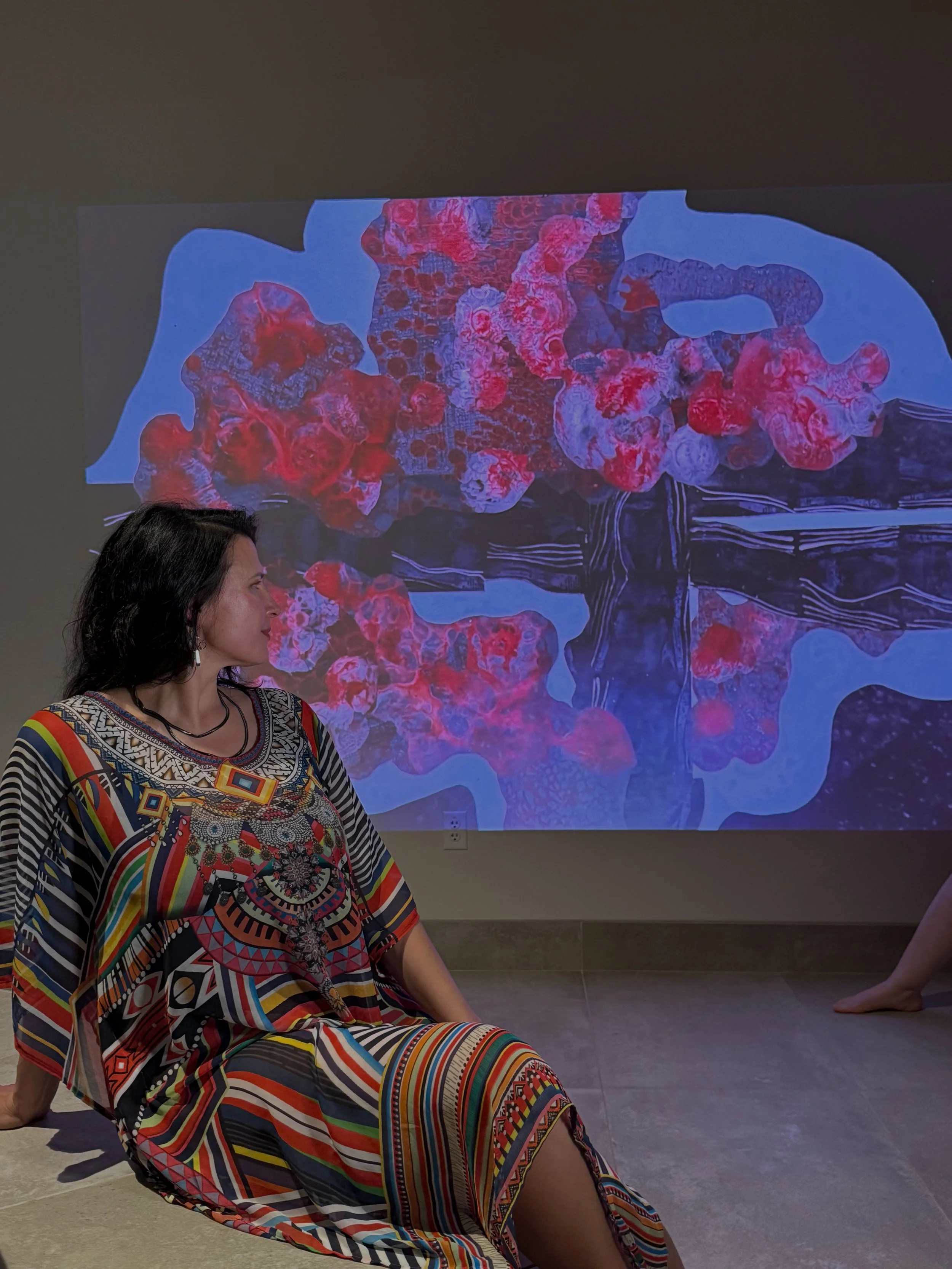
Nastia is an abstract painter and mixed-media artist whose work explores the tension between chaos and order, using layered compositions that mirror the complexity of thought, memory, and identity. Her creative process begins with spontaneity—color, gesture, and movement emerging freely—before gradually bringing those fragments into conversation with one another. Through this layering, meaning begins to surface.
Her work is also shaped by lived experience, including her journey of immigration and the ongoing process of navigating unfamiliar landscapes while staying connected to oneself. This experience of uncertainty, adaptation, and transformation informs both the structure and emotional resonance of her work.
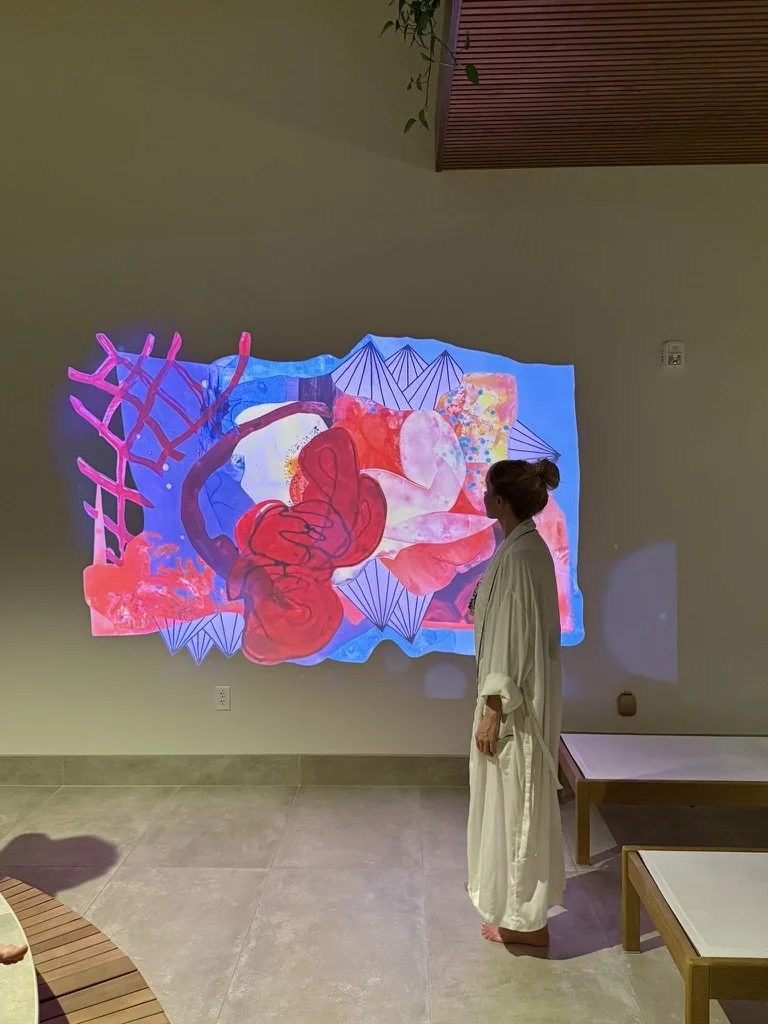
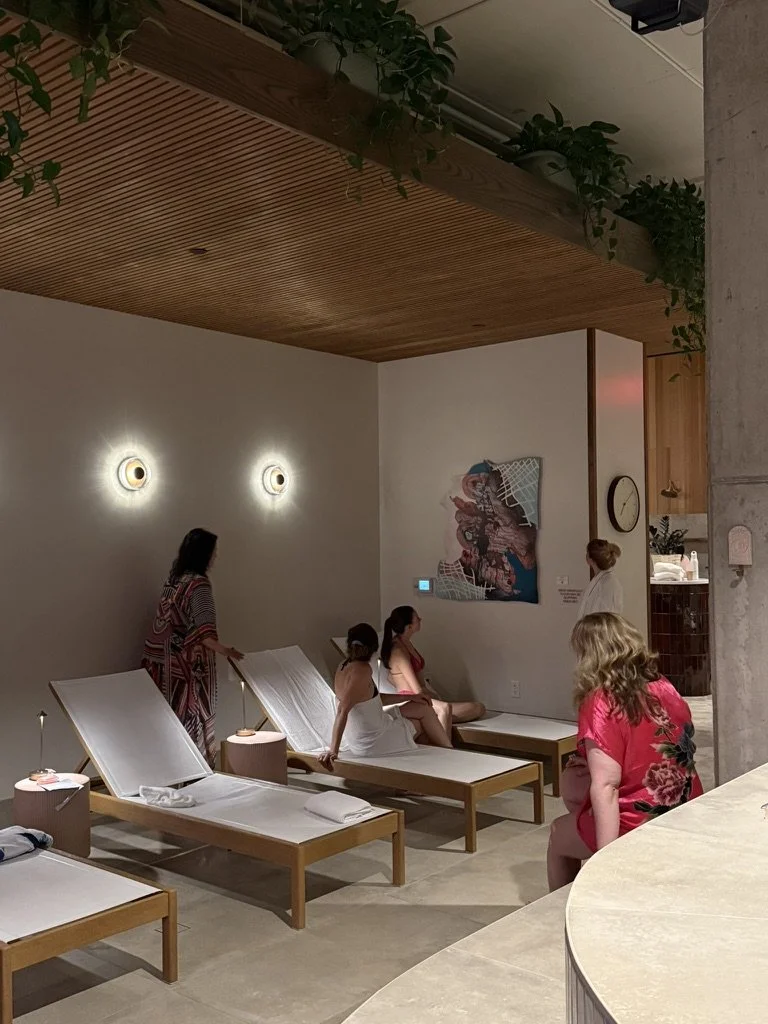
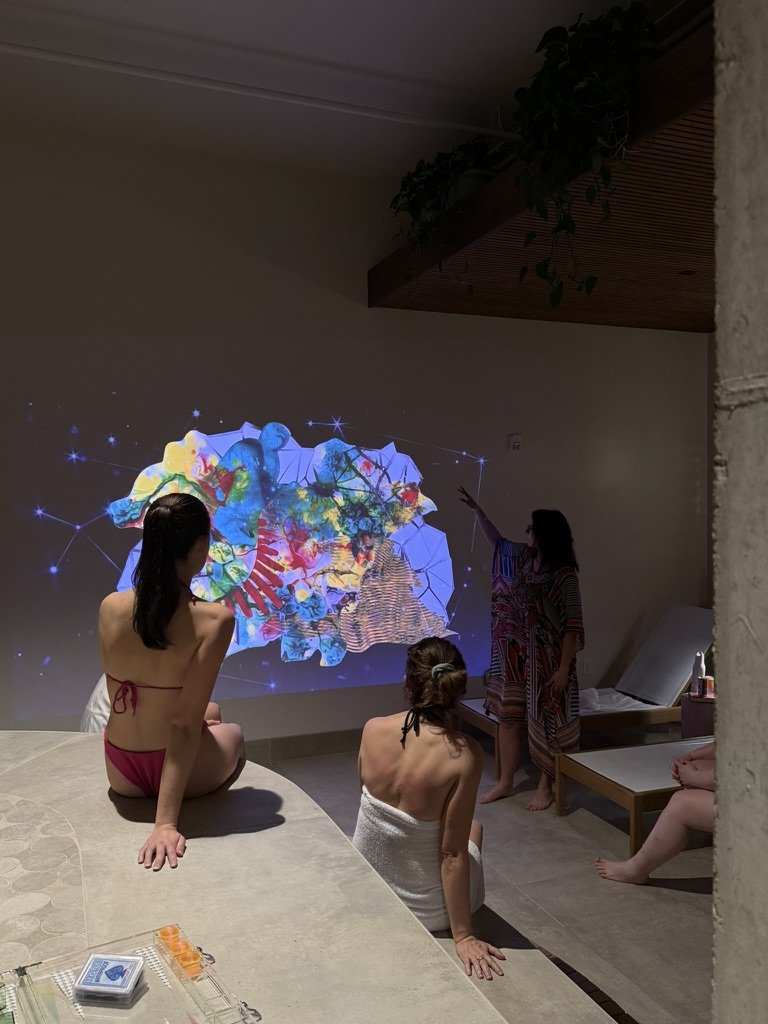
For her residency at Saunaday, Nastia’s artwork appears within the bathhouse environment itself—where warmth, steam, water, and quiet attention create a natural setting for reflection.
We sat down with Nastia to talk about her work, creative process, and what it means to bring art into a space dedicated to restoration.
Interview with Nastia Craig
When people encounter your work in moments of rest, vulnerability, or calm in the bathhouse, what do you hope they feel—or notice—in themselves?
I hope the work invites a quiet moment of self-recognition. My art is built in layers, which I often think of as a reflection of how we experience ourselves — what’s visible on the surface and what exists beneath it, shaped over time by lived experience, memory, thought, and emotion.
In a space of warmth and calm, when outside distractions fall away and the mind begins to soften, there’s an opportunity to slow down and reconnect inwardly. For some, that might mean rediscovering a feeling that has been buried — curiosity, joy, compassion, or a sense of play. For others, it may involve acknowledging something unresolved that has been pushed aside.
I don’t expect answers. I hope instead that the work creates space — a pause where people can notice what’s surfacing within them and allow it to exist without judgment.
What contributes to the meditative, immersive quality of your work?
The meditative quality comes from abstraction, layering, and movement. The imagery doesn’t depict specific places or objects, yet it often feels familiar. The forms echo patterns found in nature — the geometry of a bird’s wing, the structure of crystals, the curvature of bones, or the organic movement of plants.
Because the work isn’t tied to literal imagery, it allows the mind to wander. Like a Rorschach inkblot, viewers often project their own associations, memories, and meanings onto what they see.
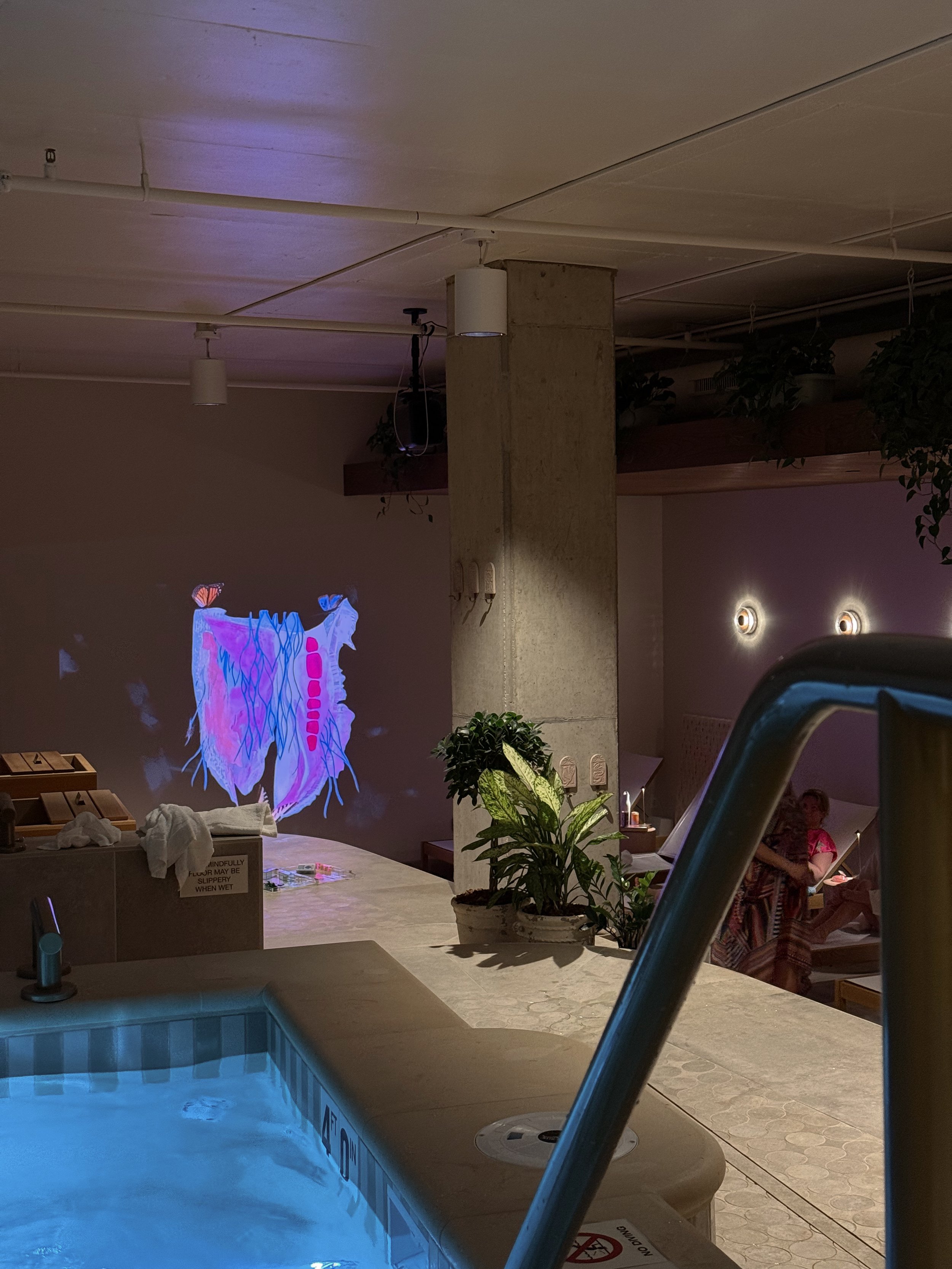
For this residency, I expanded that experience by extracting and animating elements of my work, emphasizing rhythm, flow, and transformation. Subtle motion, steam-like textures, water reflections, and pulsating forms echo sensations of breath, heat, and release.
Motifs like butterflies and petals suggest metamorphosis, reinforcing the connection between physical sensation and inner change.
What drew you to the opportunity to be the first artist-in-residence at a bathhouse?
Like many people, I move through life surrounded by constant demands — deadlines, responsibilities, and ongoing mental noise. Over time, that pace takes a toll not only on well-being but also on creativity and playfulness.
What drew me to Saunaday was the intention behind the space — a thoughtfully designed environment dedicated to pause, restoration, and presence.
The idea of placing my work within a setting that supports both physical and mental reset felt deeply aligned with how I think about art and healing.
What makes this residency especially meaningful is the opportunity for the work to actively participate in that process. Rather than existing as something separate or purely visual, the art becomes part of the experience — supporting reflection, calm, and renewal alongside the rituals of the bathhouse.
Experience the Residency
Nastia Craig’s work is currently showing in evenings 6-9p in the Saunaday bathhouse lounge. To experience, book any Saunaday reservation now through the end of April, 6-9p.
Nastia’s work is also currently on view at Carnelian Gallery in downtown Madison, where several of the original layered artworks that inspired the Saunaday projection installation are part of her current exhibition
To learn more about Nastia, please visit her website and instagram.