
What I’m bringing home from Oslo
(and hint it’s not my luggage)
This past week, I jumped off of floating saunas into the cold waters of fjords. I scrubbed magnesium voraciously into my skin in a steam room while being gently fanned by a guide. I listened to a violin concert while floating in a pool, watched indie films about bathing culture while having my morning kaffe, and squeezed into very full Aufguss sessions with a lot of naked conferencegoers.
All in the name of my work (wink).
I spent last week at the International Sauna Congress—an every four year type of sauna olympics that’s been held since 1956—with a truly thoughtful group of sauna lovers from around the world: guides, researchers, architects, operators, and people building places for their communities to gather.
As of now, in my 4:30 a.m. jet-lag haze, I’m still processing everything I experienced. But before it evaporates like löyly off the sauna stones, I want to share three key ideas I’m bringing home to Saunaday.
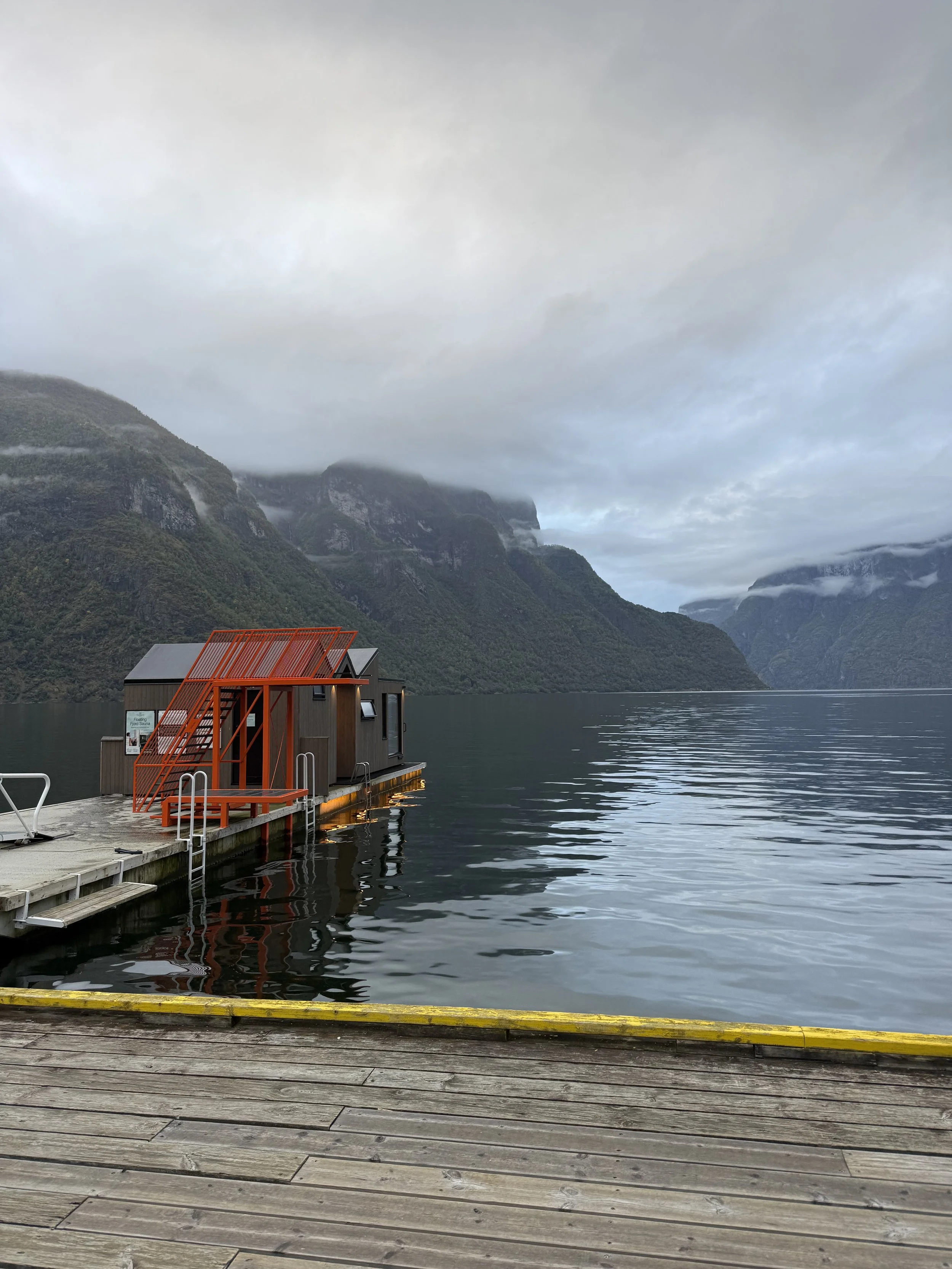
An epic first floating sauna and cold dip at Aurlandsfjord
#1: Guide towards connection over spectacle.
Lithuanian bath master Birutė Masiliauskienė shared with us her perspective on the difference between putting on a sauna show and guiding people through a shared experience. As U.S. sauna culture grows, it can be tempting to cast performers as guides and keep adding lighting, sound, and spectacle. She helped me see so clearly where I want Saunaday to grow in this space: nurturing a team of intentional and creative sauna guides.
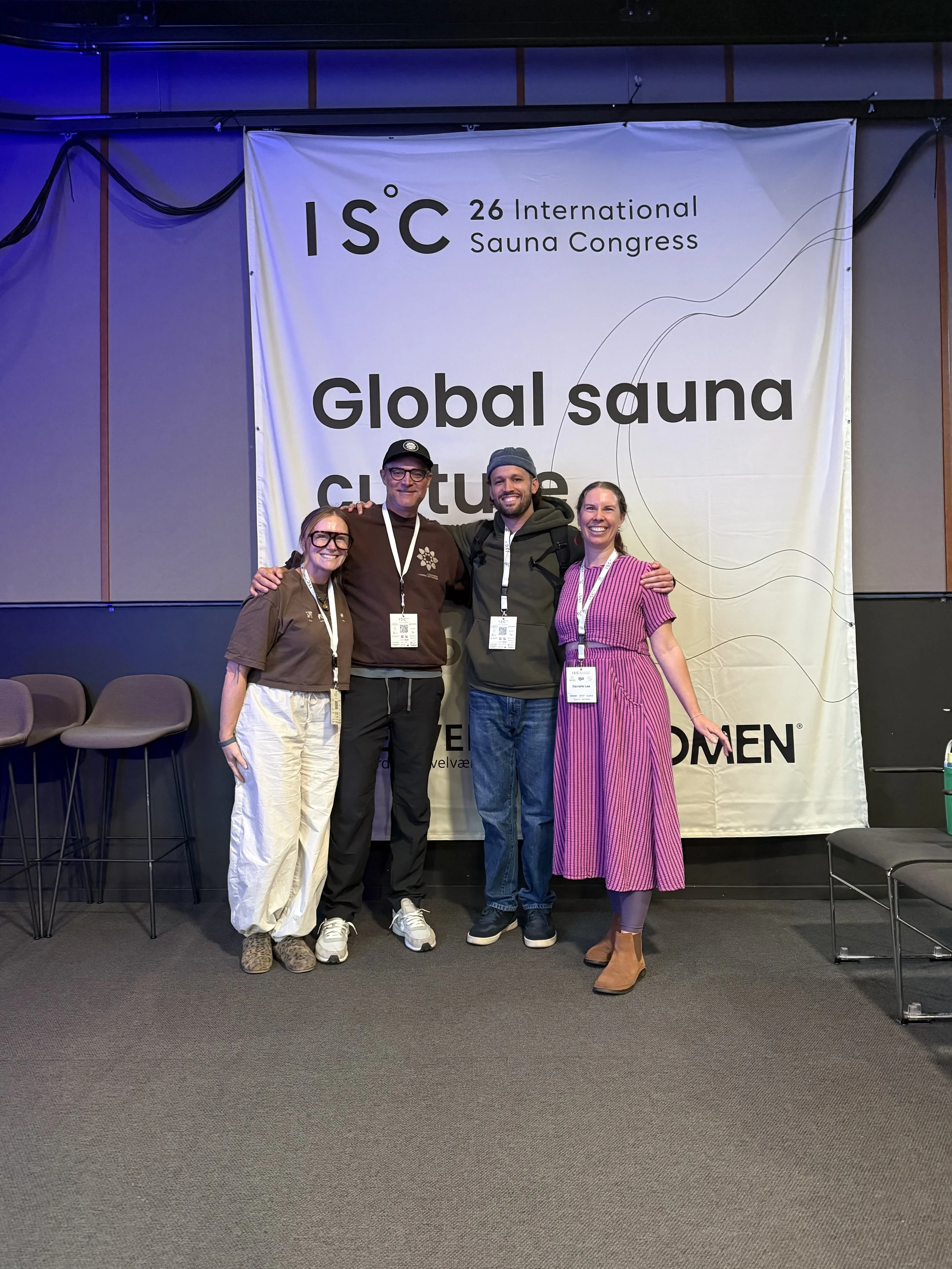
The Saunaday team in Oslo: Roshelle and Jason Ritzenthaler (Saunaday owners), Chris Farrugguia (Sound Healer), and Danielle Lee (Director of Aufguss)
A guide can help strangers feel comfortable together, notice what’s happening in their bodies, connect with others in the room, and leave with a sense that they were part of something. In my past life as a design facilitator, I helped organizations find the conceptual center of a vision, a building, a product—really, anything new they were creating together. So much of that work was about how you hold a group. And when it comes to this—the size of the group matters, the care you put into the space matters, how you approach discomfort really matters. In the end, what people remember is how you made them feel.
Birutė’s talk also left me thinking about touch. This can be a bit of a tricky subject when we’re thinking about the history of bathhouse culture, particularly in the U.S….but hang with me for a second. We’re at a point where society has made “caring touch” to be about private, 1:1, specialized, certified, and expensive experiences. Think of your typical massage. But Birutė reminded us of a history of public bathing spaces, where sauna guides offered consensual, communal, and meaningful moments of sensory care—without turning itself into a treatment room? I don’t know exactly what that could look like for Saunaday and our midwestern sensibilities, but I want to keep asking (and I already have a coffee date this week with some professionals in this field to explore it further ;)
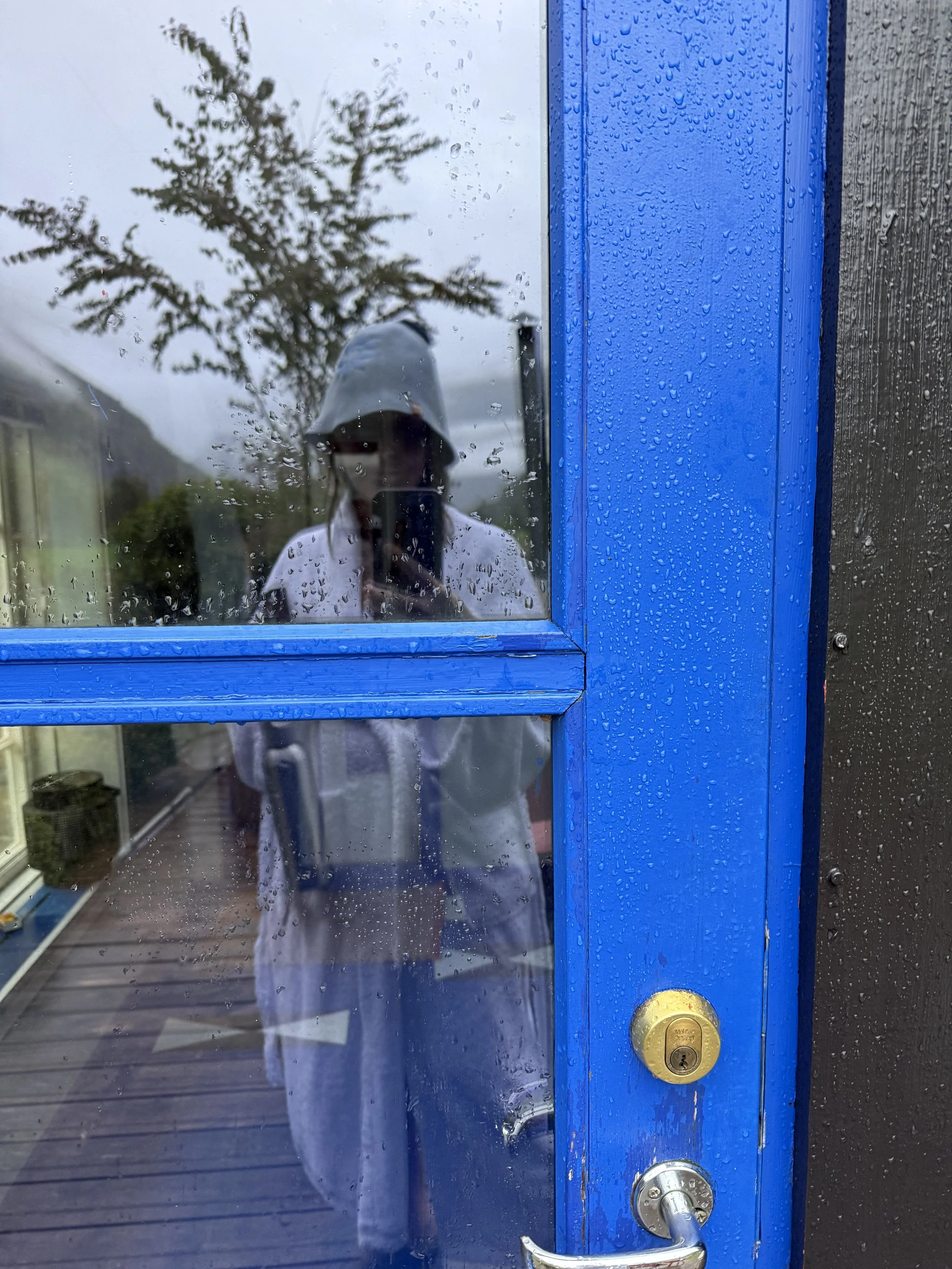
Entering a badstue in Norway with a tiny window—just enough to light the space.
2. Create (and protect) opportunities to look inward
It’s no revelation to any reader of this that we’re inundated with entertainment and visual distraction. What shifted for me in Oslo was seeing how that impulse is creeping into bathing culture, even when we’ve left our phones behind. We’re building saunas with expansive plate-glass windows looking out. Are those views becoming screens of their own? We’re adding increasingly elaborate lighting and sound systems to bathhouses. Maybe this is bathing culture meeting us where we are. But I wonder if there’s something we need to protect more fiercely.
I met more than one Finn who was vehemently opposed to windows in saunas. Their view was that these are spaces intended to help us look inward. I’m not sure I can be quite as dogmatic (who doesn’t love a beautiful view sometimes?) but I haven’t stopped thinking about it. What happens when a sauna gives us less to look at and more to feel: the heat on our skin, our breath, the sound of water meeting stones, the presence of the people beside us?
I’m thinking differently now about what our spaces invite people to notice, both inside and outside the sauna. Do we always need to give people something to watch or do? What might happen if we let them sit with the experience—and, perhaps, with themselves?
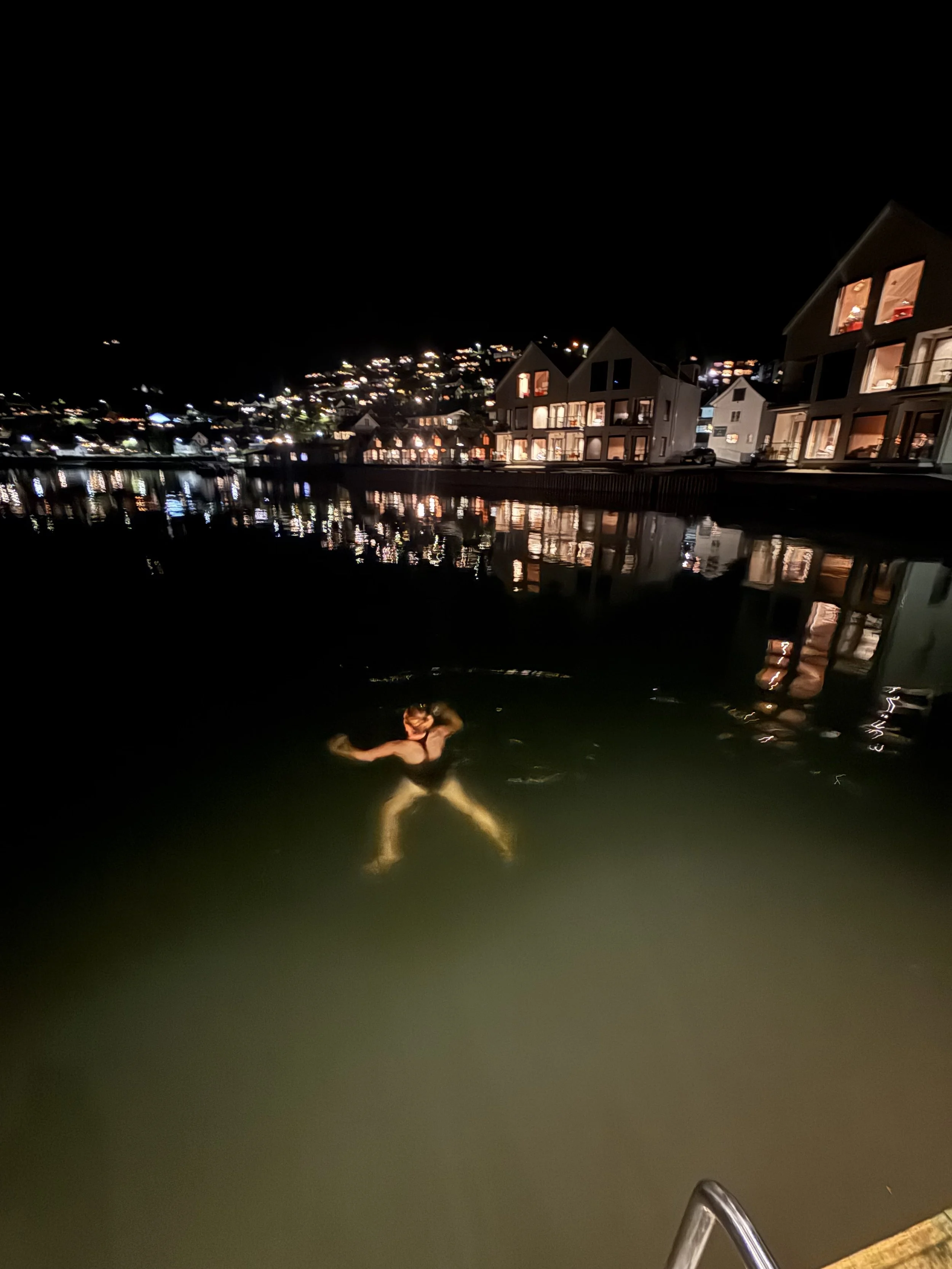
The ultimate cure for any jet lag: an icy cold dip.
3. Follow the ripple
One thing was super clear in all of our conversations in Oslo: the sauna boom sits at the meeting point of challenges much bigger than sauna itself. I hate even listing these, because they are sadly so many, but for sake of context let’s: loneliness and mental health crisis; public health and post-covid trauma; tech addition and peak distraction; pollution, climate change, and access to clean water.
But let’s flip to what gave me hope: so many people around the world are using this simple little thing called sauna to respond.
Perhaps my favorite talk was by Ashley Mason of UCSF. Her team’s work on heat and depression raises a hopeful question: could an experience as simple as sauna eventually play a world-changing role in mental health care? The possibility that how we heat and cool our bodies is connected to our mental health is so fascinating to me. Her early clinical studies of heat as a potential treatment for depression are promising, and I’m eager to see what she and the SEA Lab learn next. Give her a follow, read the research papers—I promise it will be worth your time.
Ashley’s presentation made me wonder what we’ve lost by editing so much thermal variation out of daily life. We move from one temperature-controlled room to another. Could returning to regular experiences of warmth and cooling down support us in ways we may not even yet fully understand? Researchers are studying sauna in relation to cardiovascular health, dementia risk, sleep, and longevity. There are still important questions about cause, dose, and who benefits, and who pays for it. But seeing mental health research alongside those larger public health questions made me think about the full potential of a practice that has been part of human life for generations.
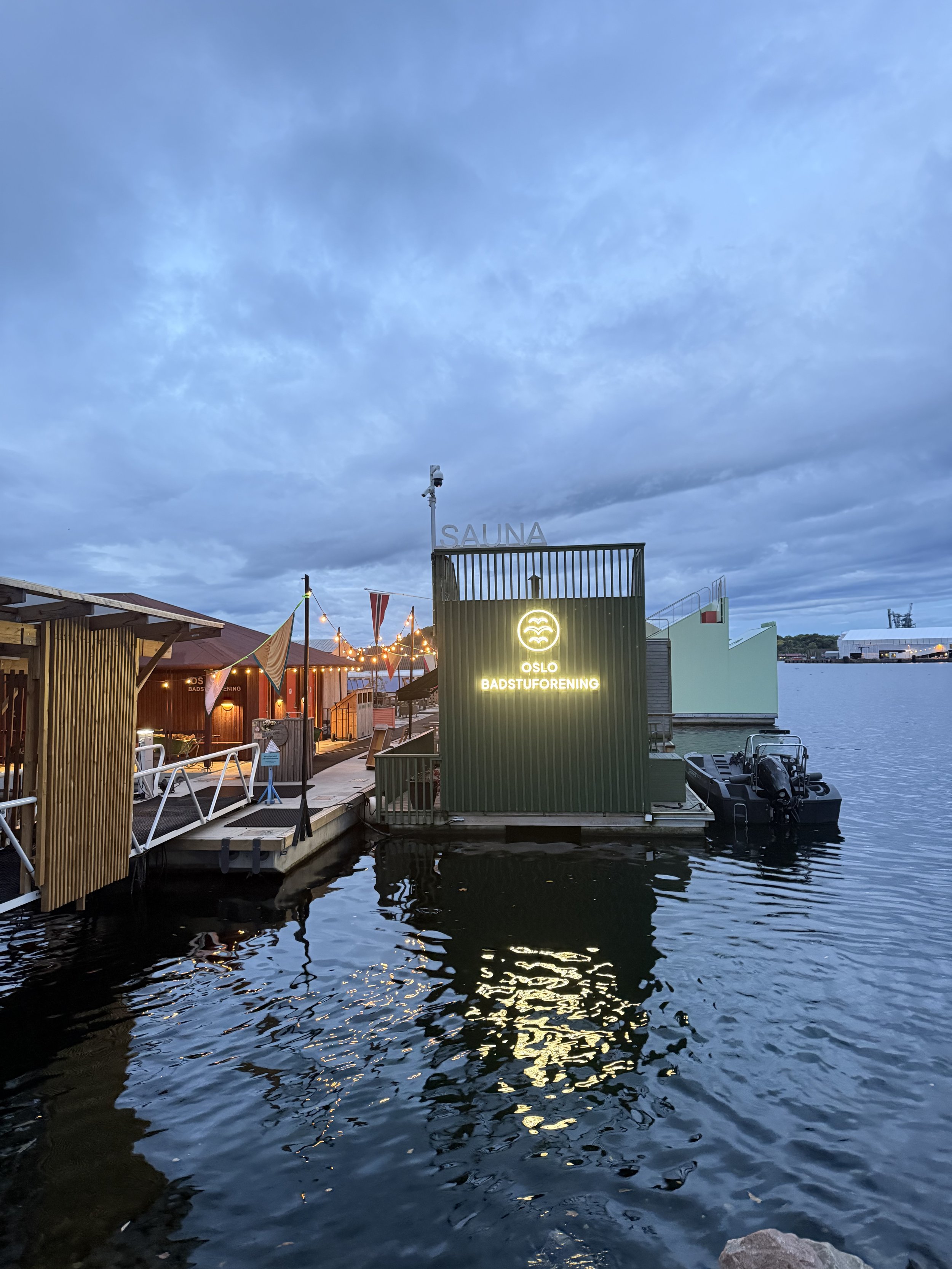
Oslo was a gracious and inspiring host. In a remarkably short time, its waterfront, and Oslo Badstuforening, has become the floating sauna capital of the world.
Then there’s Oslo itself. Floating saunas bring people to a waterfront that the city has worked to make accessible and swimmable. That experience depends on clean water—and gives people another reason to care about keeping it clean. A sauna can ripple outward from one person’s wellbeing to public life and to the place a community shares.
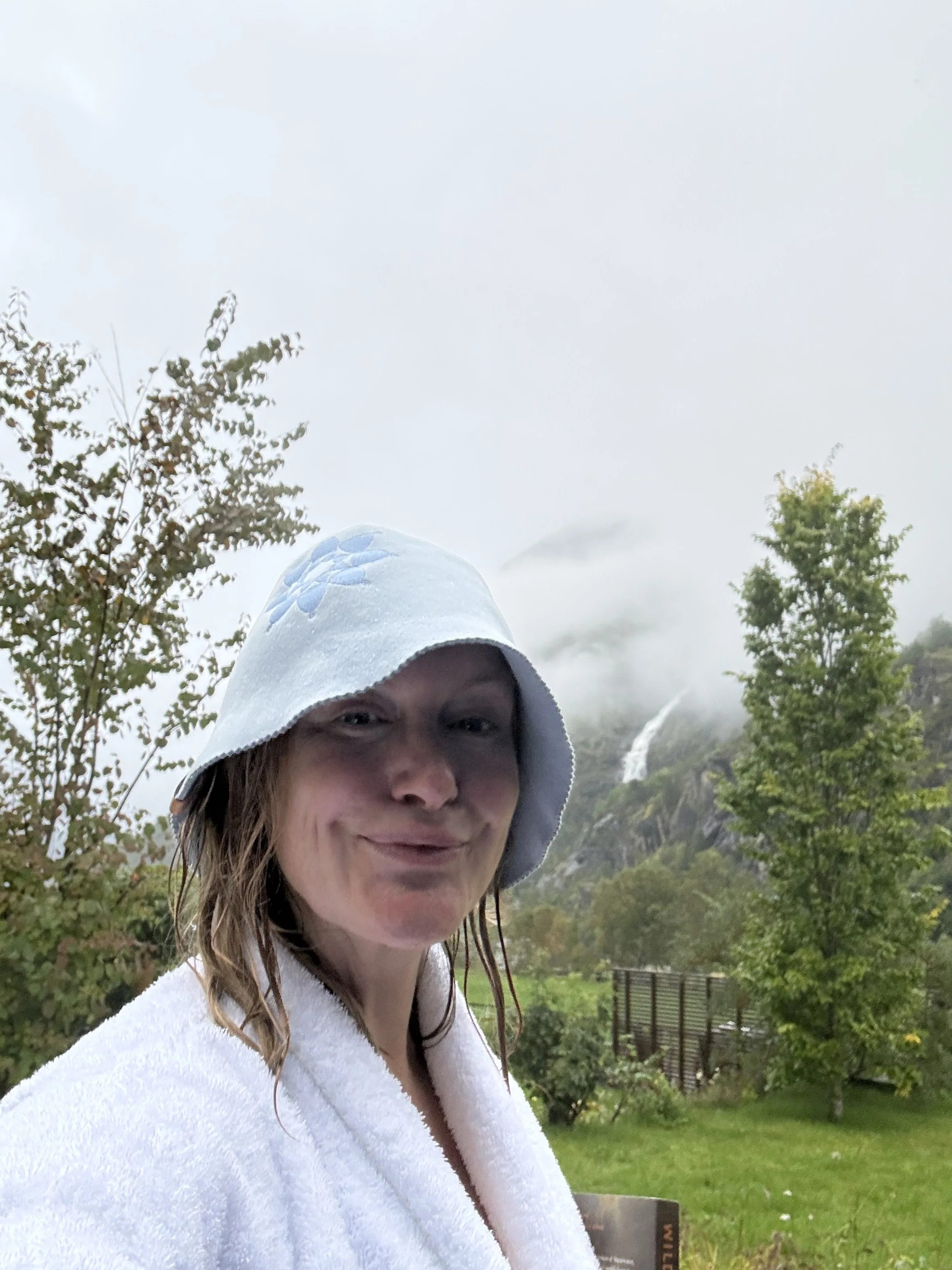
Feeling reinvigorated.
If I’m being completely honest, I went to Oslo hoping (needing?) to feel reinvigorated before our next peak sauna season. Anyone who’s opened a business (or had a child) knows the blessing and the weight of a first birthday. It’s a celebration to look back at how far you’ve come in a year. It’s also a holy shit moment when you realize you have a lifetime to go.
Thankfully, Oslo gave me what I needed. I came home reminded that we’re bringing more than heat, steam, and cold water to Madison. We’re carrying forward traditions that our own Finnish, German, Norwegian, and Irish ancestors would have known, with meaning that reaches beyond the walls of a sauna. And I met a few new friends who are asking the same questions, in places all over the world.
(Now, if only my suitcase would come home too.)